I Have Done It Again One Year in Every Ten I Manage It
Andrew has a nifty interest in all aspects of poetry and writes extensively on the subject. His poems are published online and in print.
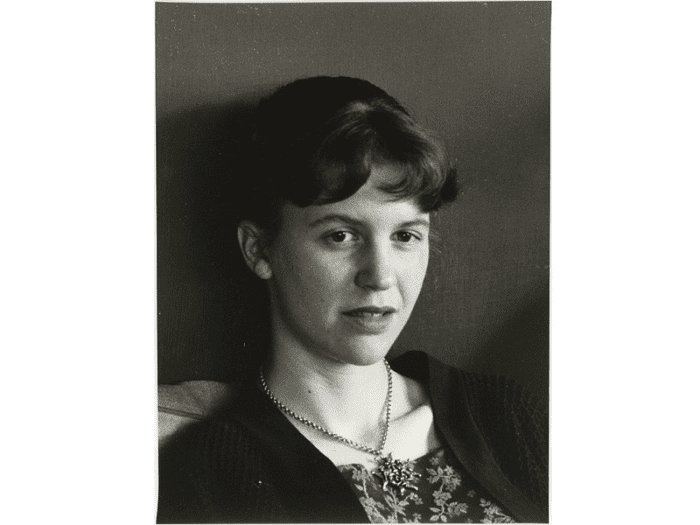
Sylvia Plath
Sylvia Plath and A Summary of Lady Lazarus
Lady Lazarus is one of Sylvia Plath's best known poems. Written in the final few months of 1962, it is i of several powerful poems Plath wrote in quick succession, before her death on 11th February 1963.
- Lady Lazarus is not a raw, straight confessional poem, despite that first person conversational opening line, but a melodramatic monologue on the bailiwick of identity.
- For Sylvia Plath, identity had a strong, inherent existential element. Her German begetter died prematurely when she was eight years one-time, leaving her emotionally bereft. She nearly drowned when 10 years sometime whilst pond out to sea. Many recall this was an attempted suicide. This incident is mentioned in the poem.
- Later on in life she once again attempted suicide and failed. Bouts of depression throughout her adult life had to be treated with medication and electroconvulsive shocks.
- In the poem the speaker compares herself to a cat, having nine lives. But she besides grotesquely states:
Dying
is an art, like everything else.
I practice information technology uncommonly well.
- At that place is also parody, functioning and pain simply in the end the reader is left in fiddling doubt that the speaker, a suffering woman out for revenge, is reborn as a mythological animate being capable of eating men.
Male characters play an important role in Plath'due south poetry and in Lady Lazarus they feature prominently. The fact that she used High german words - Herr Doktor, Herr Enemy and so on - relates to her father, who was German language. She had a complex relationship with Otto Plath. Her verse form 'Daddy' attests to this.
Her marriage to fellow poet Ted Hughes ended in the summer of 1962 when Sylvia Plath got to know of an affair between Hughes and 1 Assia Wevill. This must have influenced the tone of the verse form with regards to the warning given to all males almost the stop.
It is clear from reading biographies and her messages that the terminal few months of Sylvia Plath'southward life were a mix of creative highs and devastating emotional and psychological lows. She never could quite discover a tolerable way through.
From the championship, with its reference to the biblical Lazarus, raised from the dead by Christ, to the final stanza where the speaker, having been burnt to ash, rises like a phoenix, the emphasis is on regeneration - new class, miraculous transformation - the creative person, the artistic work, living on.
The most controversial aspect of the poem is the reference to the awful events at the Belsen concentration camp run past the Nazis in the second world war. Jews from all sorts of backgrounds were subject area to the most gruesome experiments earlier beingness murdered.
Sylvia Plath was well enlightened of the provocative contents of her poem. She wrote:
'What the person out of Belsen - physical or psychological - wants is nobody maxim the birdies still get tweet-tweet, but the full noesis that somebody else has been there and knows the worst, merely what information technology is similar.'
Letter to Mother, Oct 1962
The speaker'due south suffering in the verse form relates to that of any private who went through the trauma of the holocaust. Many critics accept questioned Plath's inclusion of Belsen and associated horrors; they see it as insensitive and gross.
Equally it could be argued that an artist has a duty to provoke and challenge and that no subject field should be taboo.
Sylvia Plath must have known that past using such sensitive linguistic communication she would shock and offend, but as she did in her poem Daddy, which focuses mainly on her father Otto. In the poem he is portrayed as a Nazi, yet in real life there is no evidence to propose this. So the poet Plath is creating a poetic persona, a fictional character.
Scroll to Continue
Read More From Owlcation
- The same goes for Lady Lazarus. This is not a straight autobiographical confessional verse form at all but a created drama, a set of scenes in which Plath's frustrations and struggles can play out.
From this the question arises - does her utilize of such controversial linguistic communication actually work within the poem and enhance information technology as a piece of work of art? The final answer must exist upwardly to the reader.
We'll let Sylvia Plath herself explain:
'The speaker is a woman who has the great and terrible gift of beingness reborn. The only trouble is, she has to die get-go. She is the phoenix, the libertarian spirit, what you will. She is besides but a good, plain, very resourceful woman.'
Sylvia Plath, introduction to 1962 BBC recording of Lady Lazarus reading.
Lady Lazarus
I accept done information technology again.
One year in every ten
I manage it——
A sort of walking miracle, my skin
Brilliant as a Nazi lampshade,
My correct human foot
A paperweight,
My face a featureless, fine
Jew linen.
Pare off the napkin
O my enemy.
Practise I terrify?——
The olfactory organ, the eye pits, the full prepare of teeth?
The sour breath
Volition vanish in a twenty-four hour period.
Before long, soon the flesh
The grave cave ate will be
At dwelling house on me
And I a smiling woman.
I am just thirty.
And like the cat I take nine times to dice.
This is Number Three.
What a trash
To annihilate each decade.
What a million filaments.
The peanut-crunching oversupply
Shoves in to see
Them unwrap me hand and foot——
The big strip tease.
Gentlemen, ladies
These are my hands
My knees.
I may exist skin and bone,
Even so, I am the aforementioned, identical woman.
The first time it happened I was 10.
It was an accident.
The second time I meant
To last it out and non come back at all.
I rocked close
Equally a seashell.
They had to call and phone call
And option the worms off me like sticky pearls.
Dying
Is an art, like everything else.
I do it exceptionally well.
I exercise it and then it feels like hell.
I exercise information technology so it feels existent.
I guess you lot could say I've a call.
It'due south like shooting fish in a barrel enough to practise it in a cell.
It's piece of cake enough to do it and stay put.
It'south the theatrical
Improvement in broad day
To the same place, the aforementioned face, the same brute
Amused shout:
'A miracle!'
That knocks me out.
There is a accuse
For the eyeing of my scars, there is a charge
For the hearing of my centre——
It really goes.
And in that location is a charge, a very large accuse
For a discussion or a touch
Or a fleck of claret
Or a piece of my hair or my clothes.
Then, so, Herr Doktor.
And then, Herr Enemy.
I am your opus,
I am your valuable,
The pure gold infant
That melts to a shriek.
I turn and burn.
Do not recollect I underestimate your great concern.
Ash, ash—
You poke and stir.
Mankind, bone, there is nil there——
A cake of soap,
A wedding ring,
A gilt filling.
Herr God, Herr Lucifer
Beware
Beware.
Out of the ash
I ascent with my red hair
And I consume men similar air.
Analysis of Lady Lazarus Stanza by Stanza
Stanza 1
That famous opening line, end stopped for accent and upshot, is matter of fact and fateful also. The conversational tone continues into the second line, as if the speaker is fully too familiar with her personal history and has been 'measuring' out whatever it is she has washed, but not in coffee spoons (like Eliot'southward Prufrock).
The dash at the finish of the third line leads the reader on and allows for that casual second stanza opening.
Stanza 2
Lazarus, from the title, was raised from the expressionless past Christ (bible John xi. 1-44) and this allusion is mirrored in the speaker's own utilize of the word. She's inferring that she shouldn't actually be around (alive whatever longer) but she is.
The first line ends with enjambment, the line running on. The second line, infamous, refers to the bloodcurdling fact that in the Nazi death camps the skin of victims was used to make lampshades (and soap).
Plath's use of this is shocking, the reasons complex, part to practise with the relationship she had with her father Otto Plath, a German scientist who died prematurely, when Sylvia was only 8 years old. It seems that she never forgave him.
The third line alludes to the foot (also mentioned in her poem Daddy) which is a symbol of the speaker's life.
Stanza 3
Metaphorically the foot is a paperweight, an object used to keep papers in place, and so not used for walking - this foot isn't getting anywhere, this life isn't going anywhere?
Her face is indistinctive, a fine Jew linen. Again, reference to the Jews and their awful handling by the Nazis. In that location is something bleak and rather eerie about this masking effect. The image is besides surreal - the speaker is steadily creating a weird persona.
Stanza iv
And the kickoff advent of the enemy, asked to peel off the napkin, presumably the i covering the speaker's face. This need comes out of the blue - the speaker is not solitary - and the eleventh line O my enemy has a dramatic feel.
The kickoff of only two questions in the poem seems to be the speaker presuming that she terrifies the enemy, considering she is dead?
Stanza five
The 2nd question goes through olfactory organ, optics and teeth...and breath. So she is still live? Yes it seems. But it will vanish in a day..is that the sourness or the breath itself?
This is a rather gruesome picture edifice, the speaker dead but alive, like a zombie.
Stanza half-dozen
A curious mix of personification and metaphor make this one of the unusual stanzas.
Note the enjambment throughout this stanza, and the repeated soon, which is rather hopeful in tone, pointing to the near time to come. And just what is the grave cave? Is information technology a grave where the speaker has been cached? Maybe it's not to be taken literally. It could be a symbol of domestic life, tiresome routine, which Sylvia Plath at times detested...so it ate her upwardly.
Is she suggesting that in a curt time the flesh will conform her and brand her smiling, make her happy? Later all, she is Lazarus, who was dead but has been resurrected.
Stanza vii
Because of this resurrection she is relatively happy. But she has to remind herself just how young she is. 30 years one-time. Being so young and like a true cat means she has enough of lives yet to live. ix in fact, co-ordinate to sociology. Cats e'er seem to land on their feet it's true, but the speaker isn't and so lucky?
Note the three lines, all finish stopped, meaning pauses between each divide line, a technique the poet uses in other stanzas (12, 16, 22 and 24).
Analysis of Lady Lazarus Stanza past Stanza
Stanza 8
This is number three, the third life out of a possible nine. Again, a matter of fact statement, as if the speaker is ticking her lives off on a chart, as someone might days on a calendar.
The Americanism What a trash infers that the speaker is aware of wasting her life, again seen in terms of number, three decades.
Stanza ix
A meg filaments - filaments are the slender wires in low-cal bulbs or are thin fibres in plant or animal structures. So is the idea one of many many strands combining to make up the structure of the speaker'southward life dilemma? Or are they loose ends?
The side by side line offers up a dissimilar scene. There is now a crowd, a pushy audition who are eating peanuts eager to see some kind of show or performance.
Stanza 10
Up to this signal only the enemy had seen her skin but now she is exposed before an audition, the public? She is being unwrapped by somebody simply is information technology the length of her body or simply her hand and foot being exposed? Presumably its a full body strip - notation the big strip tease - and and so she herself takes over the announcements.
Stanza xi
One of the leanest stanzas in the poem. She points out various parts of her body. She'south skin and bone, that is, thin. Course and content in harmony, of sorts.
Stanza 12
No matter her physical appearance she is the same person, she cannot change. The 35th line is based on Plath'south bodily biography, the time when she swam out to body of water intent on drowning herself. So hither the speaker is looking back, claiming the event was not planned.
Stanza 13
The 2d suicide attempt is outlined, mayhap a combination of fact and fiction. Things are getting more than serious because this seems to exist a conscious try, unlike the commencement which was an accident.
Stanza xiv
The reference to a seashell points to another maritime event only what about the worms that stick to her, and the calling of those close to her? The seashell image enhances the idea of someone being tight to themselves, darkened, airtight off from the world.
Close Assay of Lady Lazarus Stanza by Stanza
Stanza fifteen
An evocative stanza, with that poignant starting time word leading in through enjambment to the second line which relates death to art and both to the whole. The speaker here is declaring that she excels at dying, she is an creative person to the core.
A devastating three line commitment.
Stanza sixteen
Anaphora ... repeat of I do it....at play in lines 46 and 47, edifice on the previous stanza'due south merits. This is the speaker reinforcing the idea that her dying is a conscious choice, she attempts suicide for the extreme feeling it brings. It is painful and shocking (it'south hell), it helps dismiss uncertainty and anxiety (it's existent here and now experience).
The rather brassy...I guess yous could say...is another attempt by the speaker to explain her deportment. She has a calling, a compulsion, to end it all, once more and again.
Stanza 17
Anaphora...again...Information technology's easy enough...the repeated explanations keep in bizarre and dark fashion. She's maxim that if yous want to do away with yourself cull a cell (in prison or institute?) and let happen what will happen.
The last line of this stanza points to the dramatic again. This is ane big show taking place in broad daylight.
Stanza 18
The speaker refers to the resurrection as a Comeback...the return of...back to the identical same place and face...and body. Everyone tin see, everyone shouts 'A miracle!' information technology's happened again. Bravo speaker, yous haven't managed to impale yourself.
Or is that the single individual shout of the speaker? Could be both.
Stanza 19
It's this render to the status quo that is the large surprise for the speaker. Another Americanism 'That knocks me out' sums it all up. She cannot believe the render has been successful, the suicide attempt a failure.
Merely someone has to pay for this performance. It's not a free show.
Stanza 20
People have to pay a charge, not in monetary terms only in emotional terms, psychologically. The scars gained, the heart withal chirapsia. Can the speaker believe it really goes?
Stanza 21
In that location'southward fifty-fifty more to pay for a word, a touch, some claret...these are more intimate, more than personal. This is the reduction of a person, the taking autonomously of the concrete and mental, the stripping down.
Echoes of the death camp victims again, a parallel with that of the speaker's painful suffering.
Stanza 22
And likewise a price to pay for pilus and dress. The mention of Herr Doktor, Herr Enemy, points to Plath'southward bodily male parent (and possibly her husband Ted Hughes) and by and large speaking the male ego.
Stanza 23
She speaks directly to them saying that she is their work of art (opus), she is their valuable (personal property), something innocent and precious (pure gold baby), all in ane.
Stanza 24
This precious work of art however melts down to nothing simply a shriek (piercing weep) so starts to burn. That line 72 'Practice non think I underestimate your bully concern' is either sarcasm or a 18-carat acknowledgement that people intendance.
Stanza 25
The fire dies down, all that'due south left is ash. Someone pokes at the mankind and os but it's gone.
Stanza 26
Flesh has been turned into soap,(another death camp reference) and there'south a wedding ring (allusion to her marriage with Ted Hughes which failed) and a gold filling from a tooth.
Stanza 27
Herr God and Herr Lucifer (the devil) are told to beware. Things are becoming more dramatic and unreal. Once more, the German Herr (mister) relates to the father and the Nazi regime - they are here portrayed every bit all powerful.
And so the repeated Beware is a definite warning to the all powerful male supremacy. Plath was inspired by Samuel Taylor Coleridge's poem Kubla Khan :
And all should cry, Beware! Beware!
His flashing eyes, his floating hair!
Stanza 28
The speaker rises, like a phoenix, from the ash. The phoenix is a mythological bird which perishes in flames in the nest but then rises once more to offset a new life.
So here we accept Lady Lazarus finally rising upward, a new entity, ruddy hair and all, capable of devouring men simply by animate them in.
Analysis of Lady Lazarus - Literary Devices, Rhyme and Rhythm
Lady Lazarus is a poem of 28 stanzas, each with three curt lines, 84 lines in total. On the page it resembles a slender concatenation, a tight-knit ladder of a poem which has to be negotiated advisedly by the reader.
Brusque lines tend to dull down the reading; the irregular rhythms (metrically) also take a stumbling effect as the poem progresses.
Syntactically this poem is complex - momentum never quite builds, there is no sustained beat considering of the short clauses, line length chops and heavy punctuation...terminate stops, dashes and and so on.
Alliteration
When words are close together in a line and begin with the same consonant they are alliterative, bringing texture and interest for the reader: confront a featureless, fine...hearing of my heart...chip of blood...ascension with my red.
Anaphora
Is the repeat of words or phrases in clauses. This reinforces meaning and relates to cyclic acts or events. Stanza 16:
I do it so it feels similar hell.
I exercise it and so it feels real.
Look for more anaphora in stanzas 17,xx,22,23 and 27.
Enjambment
When a line carries straight on without punctuation into the next line it is said to be enjambed. In that location is inappreciably a pause, or no pause for the reader. The sense or meaning also continues.
There are several examples of enjambment, betwixt lines and stanzas:
A sort of walking miracle, my skin
Bright as a Nazi lampshade,
My correct human foot
A paperweight,
Metaphor
There are several examples, remembering that a metaphor is a figure of speech in which a non-literal word or phrase is used instead of the bodily word or phrase:
I am your opus,
I am your valuable,
The pure gold baby
Prosopopoeia
A figure of voice communication in which an absent-minded or imagined person is represented as speaking. In stanza 19 - 'A miracle!'
Rhyme
Lady Lazarus is essentially a free verse poem - there is no set regular consequent rhyme scheme. Some lines practice chime together withal, with full rhyme. The starting time two lines for instance:
I have done it once again,
I year in every ten
Other stanzas contain lines with full rhyme but this is a hit and miss affair, there is no sound pattern or regular closure: stanzas 6,24,26,27,28.
There are irregular sets of full and slant rhyme which bring faint harmony and dissonance to the sounds every bit the poem progresses. Look for these combinations:
again/ten/skin/fine/linen/napkin/woman/bone/ten/burn/business concern.
seashell/call/well/hell//existent/telephone call/cell/pearls/miracle/theatrical.
stir/at that place/Lucifer/Beware/hair/air.
enemy/terrify/be/me/xxx/die/day/babe.
information technology/foot/weight/put/animal/shout/out.
Three/see/tease/knees.
Simile
There are several examples of simile, when a comparison is fabricated betwixt one affair and another:
And like the cat I accept nine times to die.
And pick the worms off me like glutinous pearls.
I rocked shut/As a seashell
I do it and then it feels like hell
And I eat men like air.
Sources
www.poetryfoundation.org
The Manus of the Poet, Rizzoli, 1997
The Poetry handbook, John Lennard, OUP, 2005
www.poets.org
© 2022 Andrew Spacey
Source: https://owlcation.com/humanities/Analysis-of-Poem-Lady-Lazarus-by-Sylvia-Plath
0 Response to "I Have Done It Again One Year in Every Ten I Manage It"
Post a Comment